
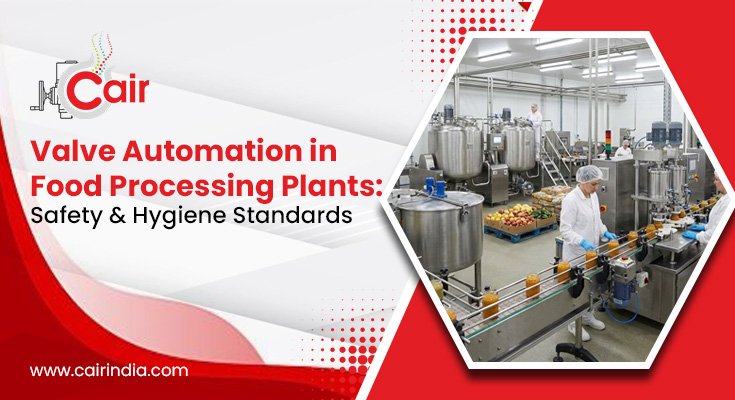
Here’s a scenario that plays out more often than most food plant managers would like to admit: An auditor walks into a dairy processing facility. The valve on the milk pasteurisation line hasn’t been cleaned properly because the ball valve cavity – invisible from the outside – has been harbouring residual milk protein for weeks. The CIP system ran as scheduled. The valve looked clean. But it wasn’t. And that’s the kind of failure that results in a product recall, an FSSAI notice, and a very expensive shutdown.
Valve selection in food processing is not just an engineering decision. It’s a food safety decision. And when you add automation to the equation – which every modern food plant should – it also becomes a compliance, productivity, and operational efficiency decision all rolled into one.
This guide is the first dedicated resource on Cair Euromatic’s website addressing valve automation specifically for food processing plants. We’ll cover the hygiene standards that govern your valve choices, the specific valve types used at each stage of food production, how automation transforms safety and throughput – and which products from Cair Euromatic’s range map directly to each application.
Why Valve Automation Matters More Than Ever in Food Processing
India’s food processing industry is growing rapidly – and so is regulatory pressure on it. The Food Safety and Standards Authority of India (FSSAI) mandates that all food business operators comply with hygiene and sanitary practices under the Food Safety and Standards (Licensing and Registration of Food Businesses) Regulations, 2011. Under FSSAI regulations, equipment and containers that come in contact with food must be made of corrosion-free materials that do not impart any toxicity to the food, and must be easy to clean and disinfect.
Manually operated valves struggle to meet these requirements consistently. A manual valve is operated differently each time – different force, different speed, different degree of closure – by different operators across different shifts. That variability is the enemy of consistent food quality and hygiene.
Automated valves – fitted with electric actuators and integrated into a control system – eliminate that variability entirely. The valve opens to the same position, in the same time, every single cycle, whether it’s 6 AM on a Monday or 2 AM on a Sunday. That consistency is exactly what food safety auditors want to see.
The business case is equally strong: automated valves reduce labour dependency, enable faster CIP cycle execution, support remote monitoring, and allow integration with modern plant-wide SCADA systems. For food processing plants expanding capacity or modernising legacy facilities, valve automation is one of the highest-return investments available.
The Compliance Framework: Standards Every Food Processing Plant Must Know
Before selecting a single valve, your engineering team needs to understand which standards govern your plant. Here’s a concise breakdown of the frameworks that matter most.
FSSAI – India’s Primary Food Safety Regulator
Any business involved in handling, processing, manufacturing, packaging, storing, or distributing food in India must obtain an FSSAI Licence or Registration. Complying with the general requirements on hygienic and sanitary practices mentioned in the Food Safety and Standards Regulations is crucial to ensure food safety and prevent contamination.
For valves and process equipment, FSSAI requirements translate to: non-toxic materials of construction, smooth and cleanable surfaces, no crevices where food or bacteria can accumulate, and resistance to the cleaning agents used in CIP and COP cycles.
3-A Sanitary Standards – The International Benchmark
3-A Sanitary Standards are recognised as key benchmarks for hygienic design. They define industry requirements necessary to carry the 3-A symbol, which indicates compliance verified by a Certified Conformance Evaluator through a Third-Party Verification process. Different standards apply to different equipment types – including specific standards for valves and fittings.
The fundamental criteria of 3-A Sanitary Standards ensure that food processing equipment features hygienic equipment design – surfaces in contact with food must be smooth, free of cracks, and easy to clean.
A critical regulatory update happened in late 2023 that every food plant engineer must be aware of: The Valves & Fittings working group at 3-A Sanitary Standards introduced a significant update to its hygienic standard for ball valves (Standard 68-01), clarifying that ball valves are not CIP-capable and are instead classified as clean-out-of-place (COP) only. Any ball valve not marked as “COP only” is no longer eligible to carry a 3-A certification
This is a major shift. For food processing plants that have historically relied on CIP cleaning for ball valves, this is a significant regulatory change that forces a reassessment of the role of ball valves in systems where CIP cleaning has been the norm. It means diaphragm valves and butterfly valves – which are genuinely CIP-capable – are now even more important in food processing lines.
ISO 22000 & HACCP
Food plants operating under ISO 22000 (Food Safety Management Systems) and HACCP (Hazard Analysis Critical Control Points) frameworks must identify and control all physical, chemical, and biological hazards in the process. Valves at Critical Control Points (CCPs) – such as pasteurisation temperature control, filling line isolation, and ingredient dosing – must be reliable, verifiable, and fully documented. Automated valves with position feedback make this documentation straightforward; manual valves create data gaps.
5 Key Principles of Hygienic Valve Design for Food Processing
Whether you’re purchasing new valves or auditing existing ones, these five design principles determine whether a valve is fit for food processing service.
- Smooth, Crevice-Free Internal Surfaces Any surface roughness, thread, crevice, or internal cavity is a potential site for microbial adhesion and biofilm formation. Food-grade valves must have internal Ra surface finishes of 0.8 µm or better – mechanically polished or electropolished stainless steel meets this requirement.
- Full Drainability A valve that retains residual fluid after a cycle is a contamination risk. Hygienic valves are designed so that when installed correctly, gravity drains all fluid from the valve body with no pooling.
- CIP or COP Compatibility As noted above, not all valve types can be cleaned in-place. Diaphragm valves and butterfly valves with appropriate seat materials are genuinely CIP-compatible. Ball valves require disassembly for cleaning (COP) under the updated 3-A standard 68-01.
- Food-Grade Materials of Construction SS316L body with PTFE, EPDM, or silicone seats and seals is the standard. All elastomers must comply with FDA 21 CFR requirements for food-contact materials. Avoid materials that absorb flavours, colours, or odours from the process fluid.
- No External Contamination Entry Points The actuator-to-valve interface, stem seals, and cable entries must all be sealed against ingress of water, cleaning chemicals, and product. IP65 or IP67 rated actuators are minimum requirements for wash-down zones in food plants.
Valve Types Used in Food Processing: Application-by-Application Breakdown
Diaphragm Valve – The Hygienic Standard for Product Contact Lines
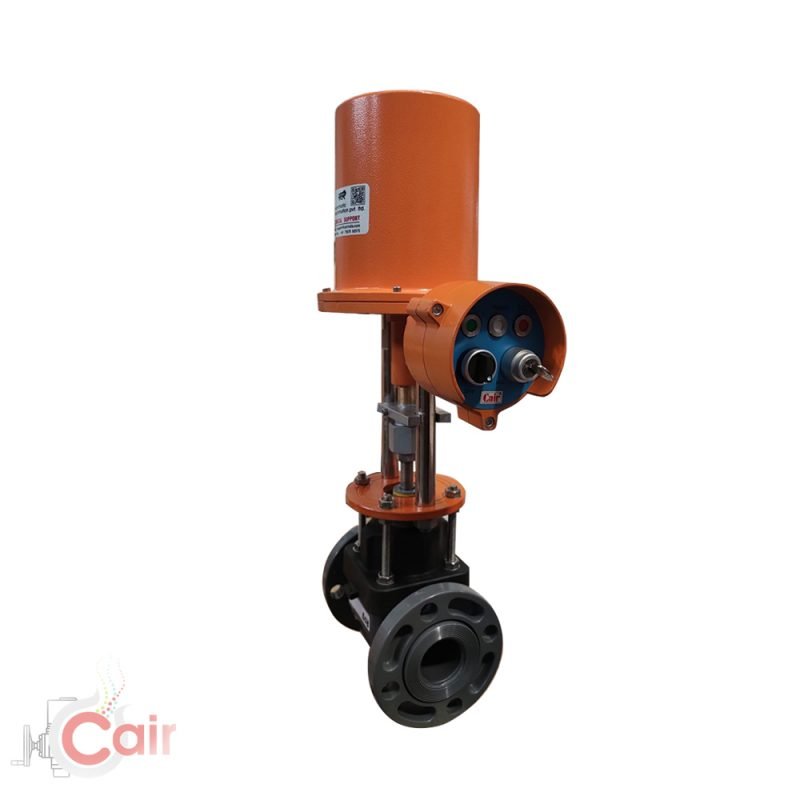
The diaphragm valve is the most important valve in a food processing plant’s product-contact piping. The flexible diaphragm pressed against a smooth weir body creates a completely dead-leg-free, drainable, and CIP-compatible flow path. There are no crevices, no stem packing, and no mechanical components inside the fluid path.
Where it’s used in food processing:
- Milk, cream, and juice process lines
- Ingredient dosing (flavourings, preservatives, acids)
- Beverage filling lines
- Brewing fermentation and transfer lines
- Sauce and condiment processing
- Edible oil handling
- CIP chemical supply and return circuits
Why automation matters here: On a filling line or pasteurisation loop, the diaphragm valve may cycle hundreds or thousands of times per day. Manual operation at that frequency is impractical and inconsistent. Cair Euromatic’s Motorized Diaphragm Valve provides precise, repeatable automated control of product contact streams – integrating directly with your plant’s DCS or PLC for fully automated batch sequencing. Each cycle is identical, documented, and traceable.
Butterfly Valve – For Large-Bore Utility and CIP Main Lines
Products by Category

2 Piece Design Replaceable Muffler Butterfly Valve “SLURRY APPLICATION”
Aluminium Cement Butterfly Valve
Aluminium Pressure Die Cast Butterfly Valve (Kitz Type)
Butterfly Valve for Pharma & Food Industry
Cement Butterfly Valve
Damper Butterfly Valve
Double Eccentric Off Set Disc Butterfly Valve Flange Type
Double Eccentric Off Set Disc Butterfly Valve Wafer Type
Extended Stem Butterfly Valve


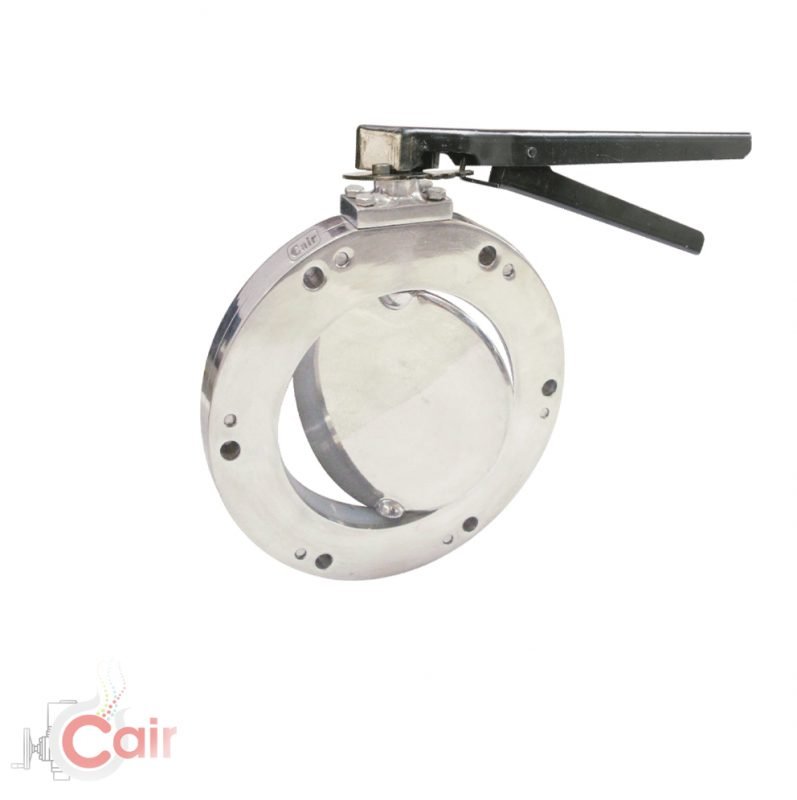
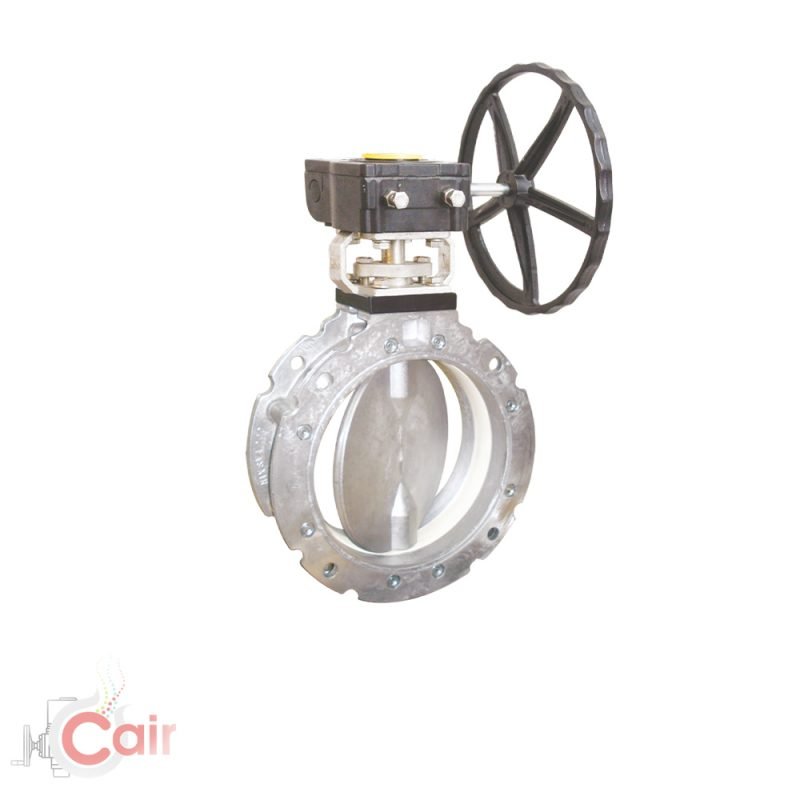


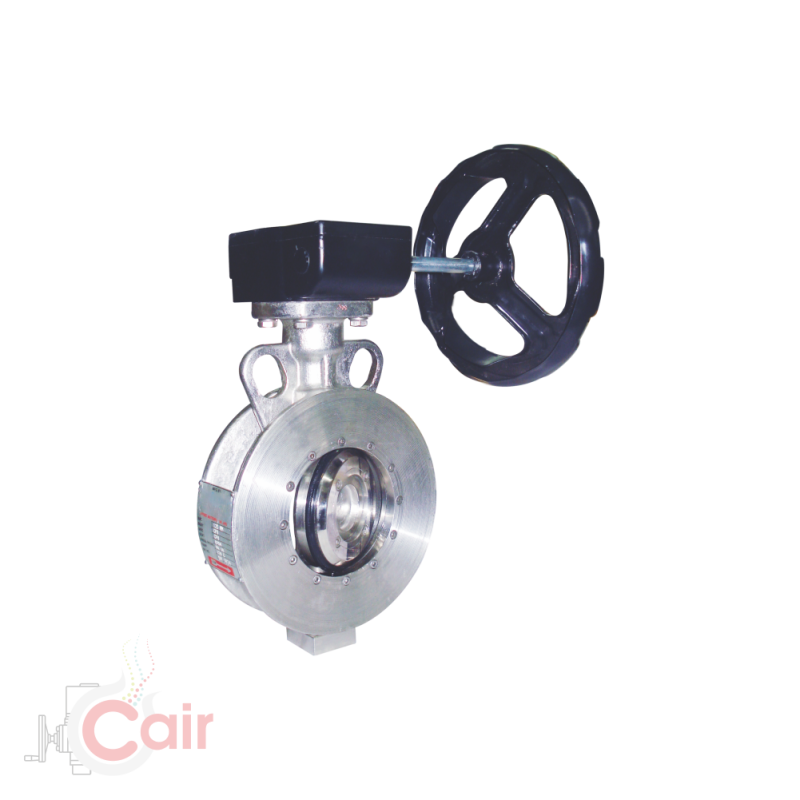
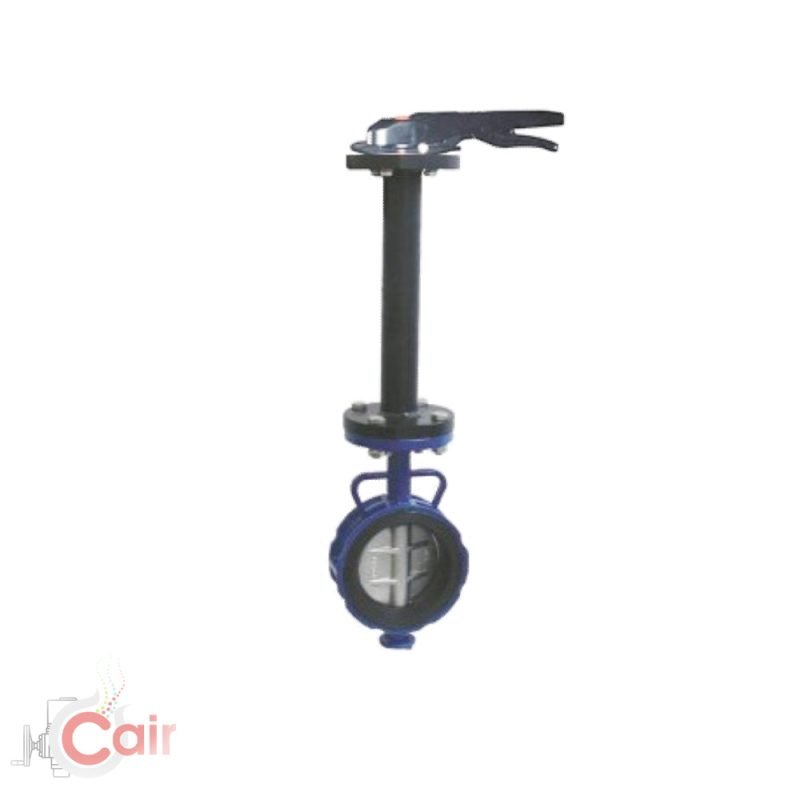
For larger diameter pipelines – DN80 and above – the butterfly valve is the standard choice for isolation and flow control. With an appropriate food-grade liner (EPDM or silicone) and a polished SS316L disc, butterfly valves are genuinely CIP-compatible, unlike ball valves under the updated 3-A standard.
Where it’s used in food processing:
- Main process line isolation (dairy reception, pasteurised milk headers)
- CIP supply and return main isolation
- Chilled water and cooling water distribution for food plant HVAC
- Steam distribution headers (cooking, sterilisation)
- Large-bore ingredient transfer lines (sugar syrup, edible oil)
Cair Euromatic’s Motorized Butterfly Valve range covers the sizes and pressure ratings needed for food plant main line automation. For food-grade service, specify EPDM or silicone disc seats with an SS316L disc for full corrosion resistance and hygienic cleanability.
Manual isolation points on less critical large-bore lines are handled by Cair’s Manual Butterfly Valve range – available across a wide size range for food plant utility and process applications.
Ball Valve – For Utility Systems and COP-Scheduled Service Points
Products by Category
2 Way FEP/PFA Lined Ball Valve
2 Way Jacketed Single Piece Ball Valve Flange Type
2 Way Jacketed Single Piece Ball Valve Wafer Type
2 Way PTFE Sleeve Plug Valve
2 Way Trunnion Mounted Inconel Spring Loaded Ball Valve
2 Way V Knotch Ball Valve
3 Way / 4 Way Ball Valve
3 Way CW Series “C Way” Ball Valve
Flush Bottom Reduce Bore Ball Valve


Following the updated 3-A Standard 68-01, ball valves are best positioned in food processing plants for:
- Utility systems: cooling water, compressed air, nitrogen blanket lines, steam supply isolation
- COP-scheduled service points where valves are regularly removed and manually cleaned
- Non-product-contact isolation duties (plant water mains, boiler feed)
- Chemical service in CIP preparation areas (NaOH, HNO₃, peracetic acid dosing)
For automation of utility ball valves, Cair Euromatic’s Motorized Ball Valve range – available in SS304, SS316, and with PTFE seats – covers the full spectrum of food plant utility automation requirements.
For CIP chemical lines handling aggressive cleaning acids and caustics, the Motorized UPVC Ball Valve combines corrosion resistance with electric actuator automation – a cost-effective solution for chemical service where stainless steel would corrode and process automation is required.
Manual isolation in utility areas and chemical storage rooms is covered by Cair’s Manual Ball Valve range in SS316 and SS304.
Globe Control Valve – For Steam and Temperature Control
Precise steam flow control is critical at multiple points in a food processing plant – pasteurisers, retorts, autoclaves, jacketed cookers, and heat exchangers all require accurate temperature management. The globe valve’s design provides the finest throttling capability of any valve type, making it the standard choice for modulating steam service.
Where it’s used:
- Pasteuriser temperature control loops
- Retort and autoclave steam supply
- Jacketed vessel heating and cooling control
- Hot water generation heat exchangers
- Spray drying chamber temperature control
Cair Euromatic’s Motorized Globe Control Valve paired with a Valve Positioner delivers the precise modulating control that temperature-critical food processes demand. The positioner accepts a 4–20 mA signal from your temperature controller and positions the valve to within fractions of a percent of setpoint – ensuring pasteurisation temperatures are held consistently across every batch.
Pinch Valve – For Viscous, Abrasive, and Particle-Laden Food Products


Motorised Pinch Valve with Electrical Actuator
TECHNICAL SPECIFICATIONS:
| Actuator | Three phase |
| Supply | 415V AC / 380V AC / 460V AC |
| Enclosure | Weather Proof / Flame Proof |
| Type | ON-OFF / 4~20 mA Modulating / 0~10V DC Modulating |
| Manual Override | Wheel Type |
| Size | 2” to 12” |
| MOC | CI / WCB / CF8 / CF8M |
| Sleeve | NBR / EPDM |
| Pressure | Upto 10 Kg/cm2 |
| Temperature | Upto 80°C / 220°C |
| Ends | Flanged End |
For handling slurries, chunky food products, pastes, and abrasive media that would damage or clog a conventional valve, the pinch valve offers an elegant solution. The rubber sleeve that pinches closed is the only component in contact with the product – and it’s fully replaceable without special tools.
Where it’s used:
- Tomato paste and concentrated fruit puree transfer
- Grain and cereal slurry handling
- Flavour particle slurries
- Waste food stream handling in ETPs
- Chocolate and cocoa mass transfer
Cair Euromatic’s Motorized Pinch Valve provides automated control of these difficult media – combining the hygienic, zero-dead-leg design of the pinch valve with electric actuator automation for integration into automated production lines.
Gate Valve – For Infrequently Operated Utility Isolation
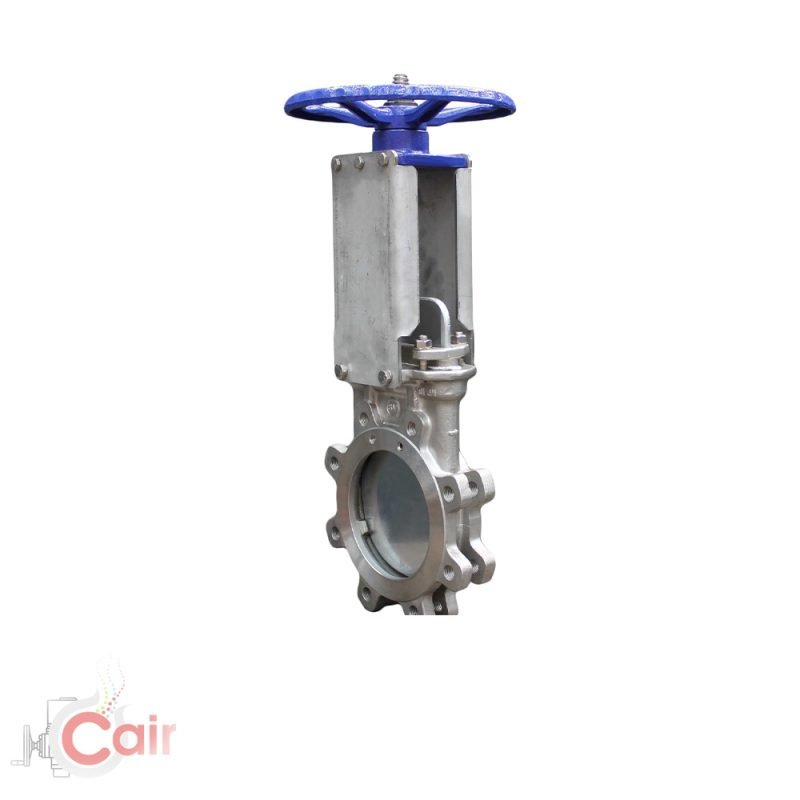
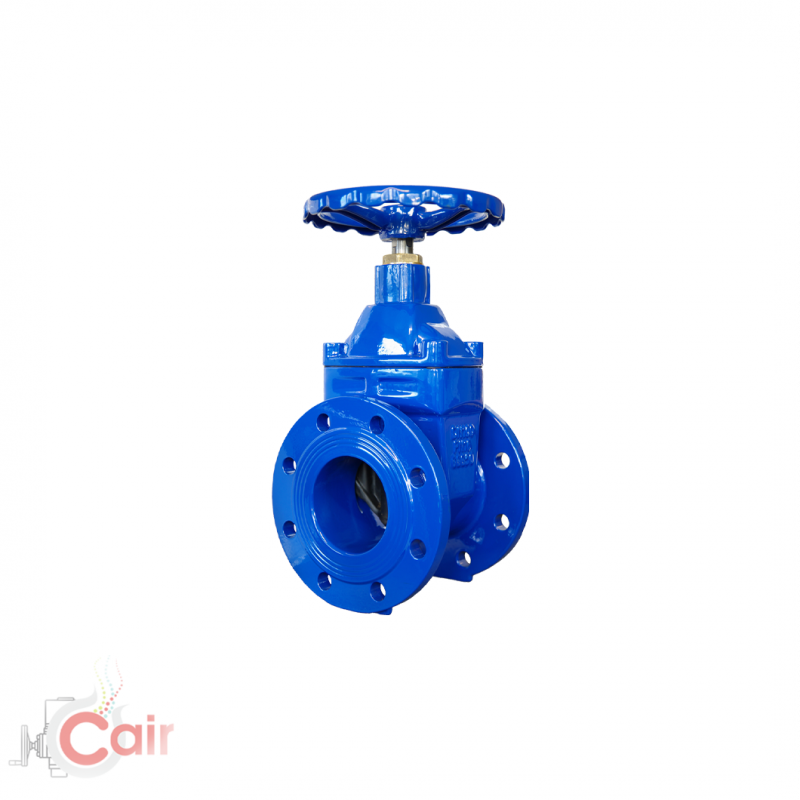
Gate valves remain common in food plant utility systems for large bore applications where the valve is opened fully and left in service – raw water supply mains, fire water systems, chilled water plant main isolation. Cair Euromatic’s Manual Gate Valve range covers the sizes and pressure ratings needed for food plant utility infrastructure.
Automation Integration: Connecting Your Valves to Your Production System
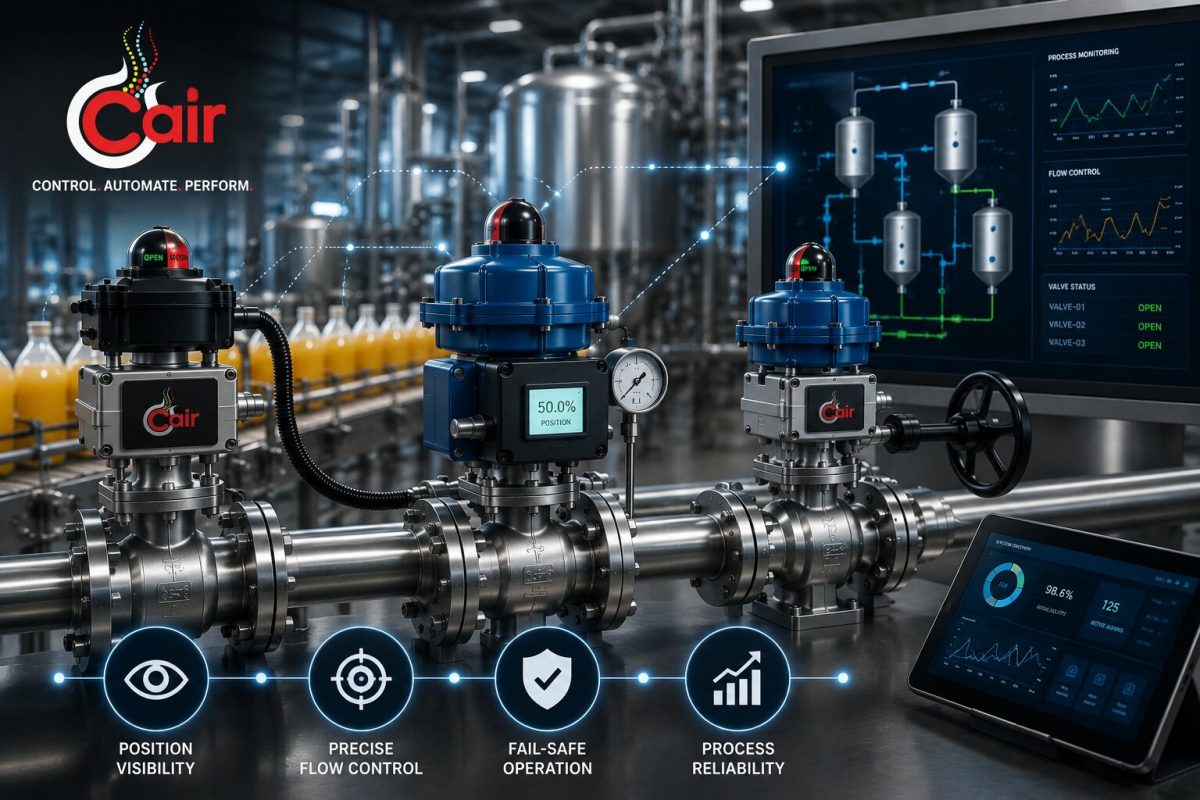
Modern food processing plants operate with SCADA, DCS, or PLC-based control systems that monitor and control every aspect of the process. Valves that aren’t integrated into this system are blind spots – you’re flying without instruments at some of the most critical points in your process.
Here’s how Cair Euromatic’s actuator accessories complete the automation picture for food plants:
Position Feedback – Always Know Where Your Valve Is
A Limit Switch Box mounted on every automated valve provides real-time open/close position confirmation to your DCS. For food safety at Critical Control Points – pasteuriser inlet isolation, filling line feed valves – confirmed valve position is not optional. It’s a HACCP requirement.
Precise Flow Control – Hit Your Process Setpoints Every Time
For modulating valves on steam, cooling water, and ingredient dosing, a Valve Positioner accepts the 4–20 mA signal from your controller and drives the valve to the exact position required – with feedback confirming actual position. This is how you maintain consistent pasteurisation temperatures, consistent fill weights, and consistent product quality batch after batch.
Fail-Safe Operation – What Happens When Power Goes Out?
In a food processing plant, a power interruption during a production run can mean wasted product, contamination risk, or unsafe conditions. A Manual Override on critical automated valves allows operators to manually position valves during power failures – maintaining control over the process even when the automation system is down.
Quick Valve Selection Reference for Food Processing
| Food Processing System | Recommended Valve | Key Specification |
| Product contact lines (milk, juice, beverage) | Motorized Diaphragm Valve | SS316L body, PTFE/EPDM diaphragm, CIP-compatible |
| Large bore process and CIP mains | Motorized Butterfly Valve | EPDM/Silicone seat, SS316L disc |
| Steam temperature control | Motorized Globe Control Valve + Positioner | Modulating, with 4–20 mA positioner |
| Slurry, paste, and chunky media | Motorized Pinch Valve | Food-grade rubber sleeve |
| Utility isolation (cooling water, air) | Motorized Ball Valve | SS316 with PTFE seats |
| CIP chemical lines (NaOH, HNO₃) | Motorized UPVC Ball Valve | Corrosion-resistant, true union |
| Large utility main isolation | Manual Gate Valve | Full bore, low pressure drop |
| Valve position feedback to DCS | Limit Switch Box | Discrete open/close signals |
| Proportional flow / temperature control | Valve Positioner | 4–20 mA input, position feedback |
5 Common Valve Mistakes in Food Processing Plants
Mistake 1: Using ball valves on CIP product lines without understanding the 3-A 68-01 update. Since late 2023, ball valves are classified as COP-only under updated 3-A standards. Using them on CIP product lines creates a compliance gap and, more importantly, a hygiene risk. Switch to diaphragm or butterfly valves for CIP-cleaned product contact applications.
Mistake 2: Specifying manual valves at Critical Control Points. Manual operation at CCPs introduces human error and creates data integrity gaps that HACCP and ISO 22000 auditors will flag. Automate CCPs and document valve operation electronically.
Mistake 3: Ignoring IP rating on actuators in wash-down zones. Food plant wash-down with high-pressure water and sanitising chemicals is a daily reality. An actuator rated IP54 will fail within months. Specify IP65 minimum for wet areas, IP67 for immersion risk zones.
Mistake 4: Selecting EPDM seats for high-acid or solvent-containing products. EPDM performs excellently with water, steam, and mild acids – but degrades with certain fruit acids, essential oils, and solvents. Verify elastomer compatibility for each specific product fluid before specifying.
Mistake 5: No fail-safe plan for power interruptions. An uncontrolled valve position during a power cut can mean product mixing with cleaning chemicals, or a pasteuriser running without temperature control. Always plan the fail-safe position for every critical valve and spec the appropriate spring-return actuator or battery backup.
Why Cair Euromatic for Food Processing Plant Valve Automation?
With over 20 years of manufacturing experience and a client base spanning food processing, dairy, beverage, pharmaceuticals, and chemicals, Cair Euromatic understands the compliance demands and process requirements of the food industry. Their range covers every valve type needed in a food processing plant – from small-bore diaphragm valves on filling lines to large-bore automated butterfly valves on CIP mains – with matching electric actuators designed for hygienic, wash-down environments.
Every valve in Cair Euromatic’s range is available with appropriate material certifications, and their technical team can advise on the right product for each specific application in your plant.
Explore the full range or contact Cair Euromatic’s team for application-specific support:
Also Explore
- All Motorized Valves – Full automated valve range for food processing
- All Manual Valves – Utility and service line valve range
- Electric Actuators – Quarter-turn and multi-turn actuators
- Accessories – Positioners, limit switches, manual overrides
- Valves in Food, Beverage & Pharma – Related industry overview
Frequently Asked Questions
Diaphragm valves are the gold standard for food product contact lines. They have no dead legs, are fully drainable, and are genuinely CIP-compatible. Under the updated 3-A Standard 68-01 (2023), ball valves are classified as COP-only and should not be used on CIP-cleaned product lines.
Yes. FSSAI regulations require that all food-contact equipment – including valves – be made of non-toxic, corrosion-resistant, cleanable materials. Additionally, food plants exporting to international markets may need to meet 3-A Sanitary Standards, EU food equipment directives, or USDA/FDA requirements.
CIP (Clean-in-Place) means the valve is cleaned by circulating cleaning solution through the closed piping system without disassembly. COP (Clean-Out-of-Place) requires the valve to be removed and manually cleaned. Diaphragm valves and butterfly valves are CIP-compatible; ball valves require COP cleaning per 3-A Standard 68-01.
Electric actuators ensure consistent, repeatable valve operation for every production cycle, generate electronic records for HACCP/ISO 22000 documentation, and allow integration with SCADA/DCS systems for remote monitoring and control – eliminating human error at critical control points.
A minimum of IP65 is required for areas subject to regular high-pressure wash-down with water and sanitisers. IP67 is recommended for areas where temporary immersion is possible. Actuators with lower IP ratings will fail rapidly in food plant environments.
UPVC valves are appropriate for non-product-contact chemical service – specifically CIP chemical distribution lines (NaOH, HNO₃, peracetic acid). They are not suitable for direct food product contact or food-grade water systems.