
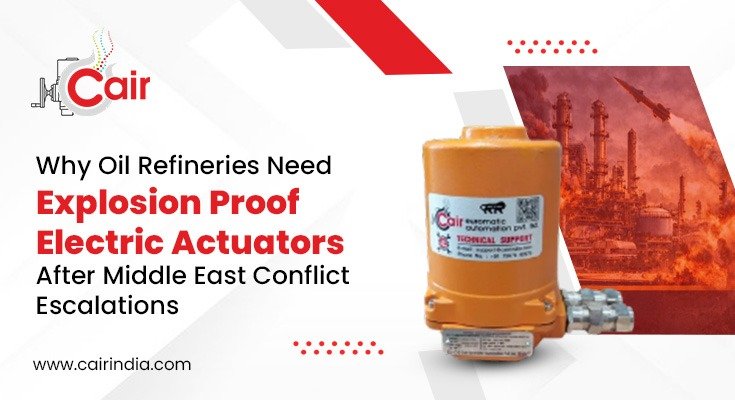
On September 14, 2019, the world watched in disbelief as drone and missile strikes crippled Saudi Aramco’s Abqaiq processing facility – the single largest oil processing plant on Earth. The attack knocked out approximately 5% of the global daily oil supply overnight. Crude prices spiked nearly 15% within hours. Insurance companies scrambled. Refinery procurement teams across Asia, Europe, and the Americas started rethinking their safety infrastructure from the ground up.
Fast forward to 2024. The conflict between Israel and Hamas has expanded its reach into petroleum logistics corridors. Iran-backed Houthi forces have been targeting Red Sea shipping lanes, directly disrupting crude oil and refined product flows. The message is clear and it’s not subtle: petroleum infrastructure is a target – and it’s more vulnerable than most operators care to admit.
1. Reuters (September 2019): Saudi Aramco attack cut global oil supply by 5%, causing the largest single-day crude price spike in decades.
2. U.S. Energy Information Administration (EIA), 2024: Houthi attacks on Red Sea shipping routes disrupted over 8.8 million barrels/day of crude flow in early 2024.
But here’s the thing most refinery operators overlook: geopolitical attacks are not the only threat. The internal hazards inside a refinery – flammable gases, combustible vapours, high-pressure hydrogen lines – have always been a ticking clock. When a conflict-driven disruption forces facilities to operate at accelerated capacity or with compromised manpower, the risk of an internal ignition event multiplies. This is exactly why global oil companies are now fast-tracking upgrades to explosion proof electric actuators across their critical valve systems.
The Geopolitical Context: Why This Is Now an Engineering Problem
What the Middle East Conflicts Have Actually Done to Refinery Risk Calculations
Let’s be direct. The Saudi Aramco attack didn’t just disrupt oil supply – it completely reframed how oil refinery valve safety is viewed by engineering and procurement departments globally. Before 2019, many facility managers treated ATEX and IECEx compliance as a box-ticking regulatory exercise. After Abqaiq, it became a boardroom-level conversation.
The pattern has continued. Israel’s strikes on fuel infrastructure in Gaza and Lebanon, combined with Iran’s increasing capability to target Gulf processing hubs, have created a dual-threat environment for every major refinery operator: external physical attack risk AND heightened internal operational pressure. Running at maximum throughput with skeleton crews during geopolitical crises means less time for safety checks, more deferred maintenance, and higher dependence on automated safety systems – including actuators.
3. Wood Mackenzie, 2024: Post-conflict infrastructure risk assessments show a 34% increase in planned safety equipment upgrades among Middle East and South Asian refinery operators.
What Global Oil Majors Are Now Prioritising
Shell, TotalEnergies, and ADNOC have all accelerated their hazardous area equipment audit programs. In India, PSU refineries including IOCL, HPCL, and BPCL are under renewed PESO compliance pressure following updated OISD (Oil Industry Safety Directorate) guidelines. The common thread across all these upgrade mandates? Certified, reliable, and remotely operable valve automation – specifically, explosion proof electric actuators in Zone 1 and Zone 2 classified areas.
4. OISD Standard 116 (Revised 2023): Mandates updated hazardous area classification and certified electrical equipment for all petroleum processing facilities in India.
Why Standard Electric Actuators Are a Hidden Liability in Refineries
Understanding Hazardous Zones in a Refinery
A petroleum refinery is not one uniform environment. It is a carefully classified patchwork of hazard zones – and not all actuators are built to operate safely in all of them. The IEC 60079 standard defines three primary zones based on the frequency and duration of flammable atmosphere presence:
Zone 0: Flammable gas or vapour is present continuously or for long periods. Found in tank interiors, enclosed sumps.
Zone 1: Flammable atmosphere is likely during normal operations. Most common in CDUs, FCC units, and LPG handling areas.
Zone 2: Flammable atmosphere is unlikely in normal operations but possible in abnormal conditions. Found in pump rooms, compressor buildings.
Installing a standard, non-certified electric actuator in Zone 1 or Zone 2 is not merely a compliance failure – it is an active ignition risk. Any internal spark, overheated winding, or brush arc from a conventional actuator motor can trigger a catastrophic flash fire or explosion in the presence of hydrocarbon vapours.
5. IEC 60079-0:2017 – General Requirements for Equipment and Protective Systems Intended for Use in Potentially Explosive Atmospheres.
The Real Cost of Non-Compliance
When a refinery’s insurance auditor finds non-ATEX or non-IECEx certified actuators in a classified hazardous area, the consequences are severe: claim rejection after incidents, mandatory shutdown orders, regulatory fines under PESO Act provisions, and – in extreme cases – criminal liability for facility managers. Beyond regulatory cost, consider the human cost: the 2005 Texas City BP refinery explosion, which killed 15 workers, was partially attributed to instrument and safety system failures in hydrocarbon processing areas.
6. U.S. Chemical Safety Board (CSB) Report, 2007: Texas City Refinery Explosion – findings cited systemic safety system failures including inadequate process control equipment certification.
What Is an Explosion Proof Electric Actuator – And What Makes It Different?
The Engineering Principles You Need to Understand
An explosion proof electric actuator is not just a regular actuator with a thicker housing. It is engineered from the ground up to prevent internal electrical faults from igniting the surrounding explosive atmosphere. There are several primary protection methods under the IEC 60079 framework:
Flameproof Enclosure (Ex d): The actuator housing is designed to contain any internal ignition and prevent flame from propagating outward. Gaps and joints are precision-engineered to cool escaping gases below ignition temperature.
Intrinsic Safety (Ex i): Electrical energy within the circuit is limited to levels that cannot ignite the surrounding atmosphere – even in fault conditions. Common in sensors and control circuits.
Increased Safety (Ex e): Components are designed to prevent sparks, arcs, or dangerous temperatures from forming under normal or specified abnormal conditions.
Pressurisation (Ex p): The enclosure is maintained at a pressure higher than the surrounding atmosphere to prevent explosive gases from entering.
Critical Certifications You Must Demand From Your Supplier
| Certification | Scope | Applicability |
| ATEX | European Directive 2014/34/EU for explosive atmospheres | Globally referenced; required by most MNCs |
| IECEx | International standard for Ex equipment | Accepted in 55+ countries including India |
| PESO / CCOE | India’s Petroleum & Explosives Safety Organisation | Mandatory for Indian installations |
| IS/IEC 60079 Series | Specific construction and testing standards | Baseline for all ATEX & IECEx certifications |
7. PESO India (2023): All petroleum storage and processing facilities must use certified Ex equipment as per Petroleum Rules 2002 (amended) and IS/IEC 60079 series.
⚠️ Red Flag: If a supplier offers “equivalent certificates” or photocopied ATEX marks without a verifiable certificate number from a Notified Body (e.g., DEKRA, Bureau Veritas, CMRI India) – walk away. Non-verified certificates are worthless in any insurance or legal proceeding.
5 Non-Negotiable Features of a Refinery-Grade Explosion Proof Actuator
Not all explosion proof actuators are created equal. When you’re specifying or sourcing for a refinery application, here are the five technical benchmarks your supplier must meet – no exceptions:
- Flameproof Housing with Robust Body Material: Cast aluminum alloy (LM6) or 316 stainless steel housing, precision-machined flame paths, IP67 or IP68 ingress protection minimum.
- Wide Operational Temperature Range: Rated for -20°C to +70°C ambient as standard. For hot desert environments (Middle East, Rajasthan refineries), look for T-class ratings of T3 or T4.
- Fail-Safe Positioning on Power Loss: Spring-return or battery-backed fail-safe mechanism ensuring the valve moves to a pre-defined safe position (fail-open or fail-closed) during power failure or emergency shutdown.
- Modulating Control Capability: Support for 4–20mA analog signal, HART protocol, and Fieldbus/Profibus communication for SCADA and DCS integration – essential for modern refinery automation.
- Mechanical Manual Override: A handwheel with position indicator that allows local manual operation during power outages or maintenance windows without requiring electrical intervention.
Where Explosion Proof Actuators Are Critical Inside an Oil Refinery
Understanding where these actuators are deployed gives you a clearer picture of why the specification cannot be compromised:
Crude Distillation Units (CDU)
The CDU is the heart of any refinery. Operating at temperatures exceeding 370°C and processing thousands of barrels of crude per hour, valve actuation here is constant and critical. Hydrocarbon vapours are present throughout. Any actuator failure – let alone an ignition event – can cascade into a facility-wide emergency.
Flare Gas Recovery Systems
These systems capture and manage otherwise wasted combustible gases. The continuous presence of flammable gas in flare headers makes this a Zone 1 environment by definition. Actuators controlling flare knockout drum bypass valves and flare header isolation must carry full Ex d certification.
LPG Bottling and Storage
LPG (Liquefied Petroleum Gas) facilities are classified Zone 0 and Zone 1 around storage spheres and filling stations. With a Lower Explosive Limit (LEL) of just 1.8%, propane and butane require the most stringent actuator specifications of any refinery application.
Hydrogen Processing Units
Hydrogen has the lowest minimum ignition energy of any industrial gas – just 0.017 millijoules. A standard actuator’s brush contact or relay arc can trigger ignition. Explosion proof actuators with Ex ia (intrinsically safe) ratings are the only acceptable choice here.
⁸ Center for Chemical Process Safety (CCPS), AIChE: Hydrogen’s minimum ignition energy is approximately 0.017 mJ – roughly 1/14th that of methane, requiring highest-level Ex protection.
How CAIR India’s Explosion Proof Actuators Are Built for Refinery-Grade Environments
CAIR India has been engineering valve automation solutions for India’s most demanding industrial environments for decades. What makes CAIR’s explosion proof actuator range specifically suited to the post-conflict safety upgrade landscape that refineries now face?
ATEX + IECEx + PESO Triple Certification
CAIR’s explosion proof electrical actuators carry ATEX (Group II, Category 2G/2D), IECEx, and PESO certifications – making them compliant for use in Indian refineries as well as export projects in the Middle East, Southeast Asia, and Europe. This triple-certification eliminates the procurement bottleneck of sourcing different products for different project jurisdictions.
Made in India – With Global Lead Time Advantage
Here’s a practical reality that procurement teams know all too well: European actuator suppliers often quote 16 to 24 weeks lead time for certified explosion proof actuators. CAIR, manufacturing in India with in-house machining and testing facilities, delivers in 4 to 8 weeks for standard models – often faster for ongoing project accounts. In a post-conflict supply chain environment where speed matters, this is a decisive advantage.
Quarter-Turn and Multi-Turn Configurations
CAIR’s explosion proof range covers both quarter-turn (for ball, butterfly, and plug valves) and multi-turn (for gate and globe valves) applications. Torque output covers the full spectrum required by refinery process valves – from small-bore instrument isolation valves to large-bore main process headers.
A Real-World Example
“A leading PSU refinery in Gujarat was upgrading their Fluid Catalytic Cracking (FCC) unit and required 47 explosion proof actuators for Zone 1 areas with ATEX documentation for their European JV partner. Their original European supplier quoted 22 weeks. CAIR India delivered the complete order with full ATEX + PESO certification packages in 7 weeks – keeping the project on schedule and under budget.”
Internal project reference – CAIR India. Details available upon request under NDA.
How to Choose the Right Explosion Proof Actuator for Your Refinery: A Practical Checklist
Whether you’re a refinery engineer specifying for a new project or a maintenance manager reviewing a safety audit finding, use this step-by-step selection framework:
Step 1 – Identify the Hazardous Zone: Confirm the area classification from your facility’s Hazardous Area Classification (HAC) drawing. Zone 0, Zone 1, and Zone 2 each require different Ex protection methods.
Step 2 – Determine Valve Type and Torque: Identify the valve type (ball, gate, globe, butterfly) and calculate required torque at maximum differential pressure. Always add a 25–30% safety margin.
Step 3 – Verify Required Certifications: For Indian projects, PESO approval is non-negotiable. For export or JV projects, confirm ATEX or IECEx requirements with the end-user or EPC contractor.
Step 4 – Define Control Mode: On-Off duty (open/close only) or Modulating duty (proportional control)? Modulating actuators cost more but offer precision control and remote diagnostics.
Step 5 – Specify Fail-Safe Requirement: Determine whether the valve must fail-open or fail-closed on loss of power or control signal. This is a process safety requirement, not a preference.
Step 6 – Confirm Enclosure Rating: Minimum IP67 for outdoor installations. IP68 for submerged or flood-risk areas (common in coastal and offshore refinery installations).
Step 7 – Evaluate Supplier Support: Verify the supplier can provide certified test reports, Ex certificate copies with Notified Body details, and has local service capability for commissioning and warranty support.
The Cost of Inaction Is Greater Than the Cost of Compliance
The Middle East conflicts have done something that decades of regulatory mandates could not: they have made petroleum infrastructure security viscerally real for every refinery operator on the planet. The question is no longer whether to upgrade safety systems – it’s how quickly you can do it without disrupting operations.
Explosion proof electric actuators are not a luxury upgrade. They are the foundational layer of valve safety in any environment where flammable atmospheres exist. In a world where geopolitical risks can materialize overnight and internal ignition events can cripple a facility within seconds, the choice to operate without certified Ex actuators is a choice to accept catastrophic risk.
CAIR India’s explosion proof actuator range – ATEX, IECEx, and PESO certified – is engineered specifically for India’s toughest refinery environments. Whether you’re working on a grassroots project, a safety upgrade program, or responding to an audit finding, CAIR delivers certified, tested, and documented solutions with lead times that keep your project on schedule.
Don’t wait for an audit finding – or an incident – to trigger your safety upgrade. Connect with CAIR India’s explosion proof actuator specialists today for a free technical consultation. Explore our complete range at cairindia.com/explosion-proof-electrical-actuators/
Frequently Asked Questions
ATEX (Atmosphères Explosibles) is a European Union directive (2014/34/EU) governing equipment used in explosive atmospheres. IECEx is an international certification scheme administered by the International Electrotechnical Commission (IEC), accepted in over 55 countries. While both follow similar technical standards (IEC 60079 series), ATEX is a regulatory compliance requirement within the EU, whereas IECEx is a voluntary international scheme. For most Indian export projects, both are required.
Yes. The Petroleum Rules 2002 (as amended), PESO guidelines, and OISD standards all mandate the use of certified Ex equipment in classified hazardous areas within petroleum processing and storage facilities. Non-compliance can result in denial of insurance claims and regulatory shutdown orders.
Standard Ex d (flameproof) actuators are rated for Zone 1 and Zone 2. For Zone 0 applications, you need Ex ia (intrinsic safety Category ia) rated equipment. Always verify the Zone classification and match it to the actuator’s Group and Category marking on its Ex certificate.
A properly specified and maintained explosion proof electric actuator in a refinery environment typically has a service life of 10 to 15 years. This is significantly longer than pneumatic actuators in environments with contaminated instrument air supplies, which commonly require overhaul every 3 to 5 years.
Yes. CAIR India’s explosion proof actuator range is available in marine-grade configurations with IP68 enclosure ratings, stainless steel external hardware, and certifications suitable for offshore and onshore petroleum installations.
References & Citations
1 Reuters (14 September 2019). “Saudi Arabia oil attacks: All the latest updates.” reuters.com
2 U.S. Energy Information Administration (EIA). (February 2024). “Houthi attacks on Red Sea shipping and energy implications.” eia.gov
3 Wood Mackenzie. (2024). “Middle East Conflict and Refinery Infrastructure Risk Assessment Report.” woodmac.com
4 Oil Industry Safety Directorate (OISD). (2023). “OISD Standard 116 – Revised: Safety Requirements for Petroleum Processing Facilities.” oisd.gov.in
5 International Electrotechnical Commission. (2017). “IEC 60079-0: Explosive atmospheres – Part 0: Equipment – General requirements.” iec.ch
6 U.S. Chemical Safety and Hazard Investigation Board (CSB). (2007). “Investigation Report: Refinery Explosion and Fire, BP Texas City, March 23, 2005.” csb.gov
7 Petroleum and Explosives Safety Organisation (PESO), India. (2023). “Certification Requirements for Electrical Equipment in Classified Hazardous Areas.” peso.gov.in
8 Center for Chemical Process Safety (CCPS), AIChE. “Hydrogen Safety – Ignition Energy and Flammability Properties.” aiche.org/ccps