
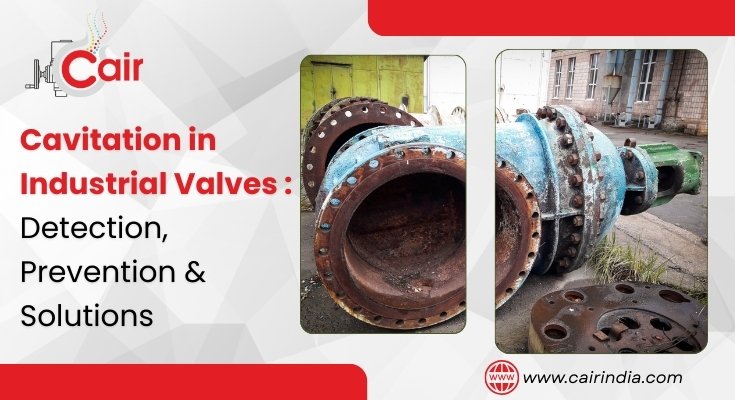
Cavitation can destroy valve internals in months if left unchecked — a small, invisible problem that quickly becomes an expensive, noisy one. At its simplest, cavitation is the formation and violent collapse of vapor bubbles in a liquid when local pressure falls below the fluid’s vapor pressure. In industrial systems this typically happens across throttling elements like control valves, where rapid pressure drops and high velocities meet.
For plant engineers and maintenance teams, understanding cavitation in industrial valves is essential: it shortens valve life, disrupts control, raises vibration and noise levels, and can even create safety risks. This article breaks the topic into practical, action-oriented guidance — what cavitation is, why it happens, how to spot it early, and which engineering and operational solutions actually work. We’ll also point you to specific valve types and industry-ready fixes, including links to deeper resources such as Manual vs. Motorized Valves so you can tackle the right solution for your system.
What is Cavitation in Industrial Valves?
Cavitation Defined
Think of cavitation like tiny underwater “popcorn”: when pressure drops locally (for example, in the narrow throat of a valve), liquid turns into vapor bubbles. When those bubbles travel into higher-pressure zones they collapse violently — releasing shock waves that pit metal surfaces and erode components. Scientifically, cavitation occurs when local fluid pressure drops below the fluid’s vapor pressure at the operating temperature.
The Cavitation Process — Step by Step
- Flow accelerates through a restriction → pressure falls.
- When pressure < vapor pressure → vapor bubbles form.
- Bubbles convect downstream to higher pressure zones.
- Bubbles implode, releasing intense energy and micro-jets that hammer metal surfaces.

Where Cavitation Occurs in Valves
Cavitation is most likely in high-velocity zones: valve trims, narrow orifices, and at the seat. It can also damage downstream piping where bubbles collapse. For more on vulnerable designs, see Types of Butterfly Valves.
Causes of Cavitation in Industrial Valves
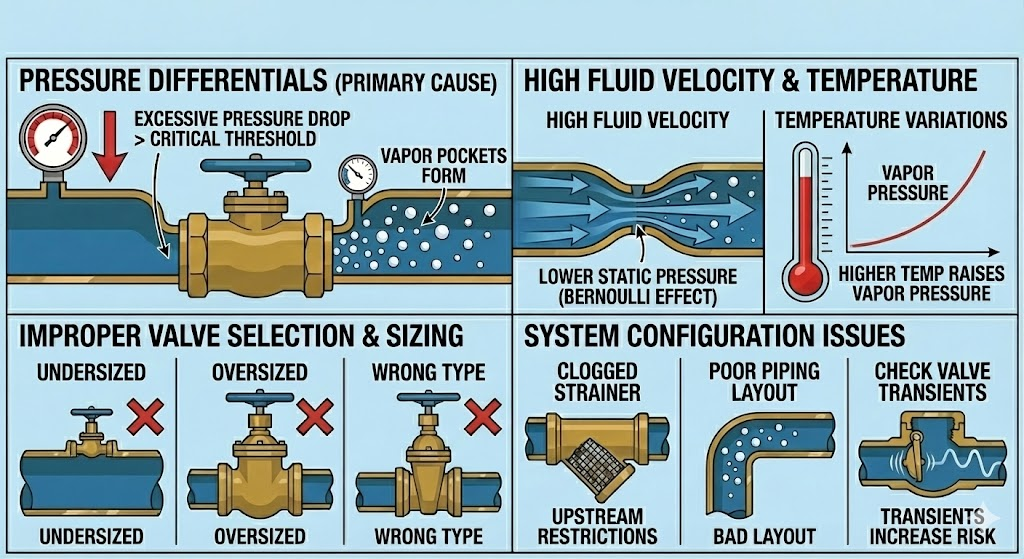
Pressure Differentials (Primary Cause)
Excessive pressure drop across a valve is the main driver. If the pressure differential exceeds a critical threshold relative to the fluid’s vapor pressure, vapor pockets form.
High Fluid Velocity
Higher velocity lowers static pressure (Bernoulli effect), producing cavitation-prone acceleration zones — especially in throttled orifice-like paths.
Temperature Variations
Higher fluid temperature raises vapor pressure, making cavitation easier. Hot service systems are particularly vulnerable.
Improper Valve Selection & Sizing
Oversized or undersized valves, or choosing the wrong valve type for throttling duty, can create conditions that invite cavitation. Check How to Select the Right Valve for Industrial Automation for guidance.
System Configuration Issues
Clogged strainers, upstream restrictions, poor piping layout or problematic check valve behavior (transients) can all increase the risk.
Signs & Symptoms — How to Detect Cavitation
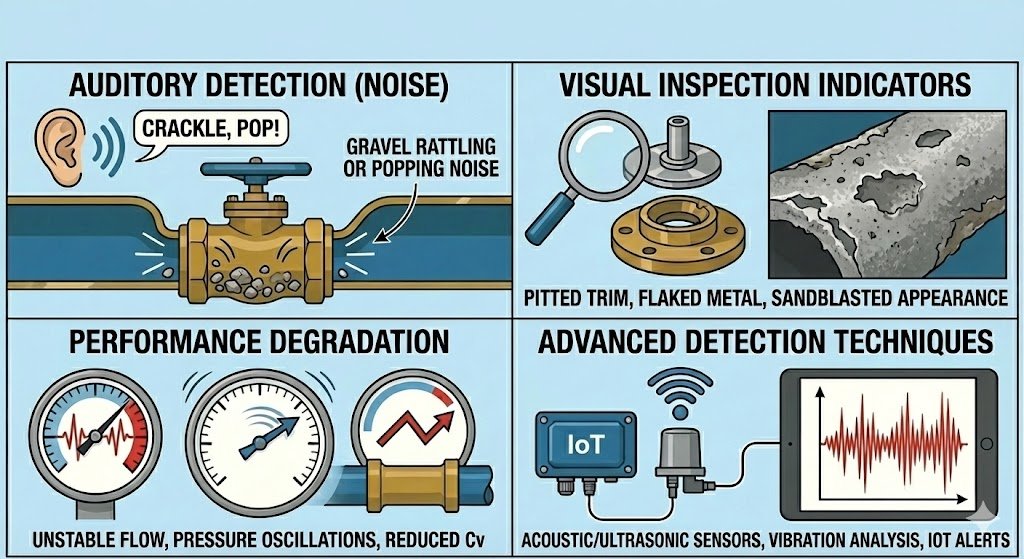
Auditory Detection (Noise)
Characteristic “popping” or crackling noise, sometimes like gravel rattling, often precedes visible damage.
Visual Inspection Indicators
Look for pitted trim, flaked metal, or a sandblasted appearance on seats and discs.
Performance Degradation
Unstable flow, pressure oscillations, and reduced Cv are common operational signs.
Vibration Analysis
High-frequency vibration spikes and specific frequency patterns often indicate bubble collapse events.
Advanced Detection Techniques
Acoustic emission sensors, ultrasonic monitoring, and pressure oscillation recording provide real-time, early-warning capabilities — modern IoT sensor kits can alert before structural damage occurs.
Destructive Effects & Impacts
Cavitation leads to rapid erosion of valve trims, loss of control accuracy, increased noise/vibration, unexpected downtime, and higher maintenance costs. Imploding bubbles can concentrate thousands of PSI on tiny surface areas, causing cracking, holes, or stem/plug compromise. Over time, these effects cascade into safety risks and production losses.
Prevention Strategies — Practical Solutions
Design & Selection Optimization
- Choose the right valve type and size for throttling duty.
- Use multi-stage pressure reduction (staged trim) to distribute ΔP.
- Fit anti-cavitation trims or modified plug/orifice designs.
Operational Control Measures
- Keep flow velocities within safe limits.
- Maintain sufficient downstream backpressure.
- Control fluid temperature where feasible.
System Configuration Solutions
- Proper strainer sizing and maintenance to avoid excessive ΔP.
- Optimize piping layout to reduce sudden contractions/expansions.
Advanced Prevention Technologies
- Anti-cavitation valves and balanced trims.
- Acoustic and pressure monitoring with automated alerts.
Material & Coating Solutions
Use hardened stainless steels, erosion-resistant alloys, ceramic or polymer coatings, and hardfacing for severe services — see Cast vs Forged Valves for material trade-offs.
Maintenance Best Practices
Regular inspections, condition trending, and timely replacement extend valve life and avoid surprise failures.
Industry-Specific Solutions
- Oil & Gas: multi-stage let-down valve systems and specialized trims.
- Chemical: corrosion-resistant materials and staged throttling.
- Water Treatment: UPVC or larger-diameter staging for high-volume flows.
- Power Generation: careful steam handling and high-temperature designs.
- Pharma & Food: hygienic materials plus strict monitoring.
(See industry links for deeper reading.)
Quick Troubleshooting Checklist
- Record operating pressure, flow, temperature.
- Check valve throttling and ΔP distribution.
- Inspect for visual erosion/pitting.
- Run acoustic or vibration scans.
- Apply temporary flow adjustments; plan permanent fixes.
When issues are complex or safety-critical, call an experienced valve specialist.
Conclusion
Cavitation in industrial valves is preventable and manageable when you combine the right valve design, system layout, operational discipline, and modern monitoring. Investing in proper selection, anti-cavitation trims, and condition monitoring pays off quickly in avoided downtime and extended valve life. If you’re seeing noise, vibration, or rapid trim wear, it’s time for a system assessment — Get Your Valve Cavitation Assessment with Cair to diagnose root causes and recommend practical, cost-effective fixes.